
Why This Blog Exists
The first thing that surprised me when I arrived in Israel was how green everything was.
There were trees along the streets, parks between buildings, flowers on balconies, and hedges lining the roads. At first, it looked completely natural. Then I remembered: this was a desert.
None of this existed by accident.
Beneath almost every tree and shrub was a thin irrigation line delivering water drop by drop. Every plant depended on a system of pipes, pumps, valves, and sensors that somebody had designed and built. Without that system, much of what looked natural would disappear within days.
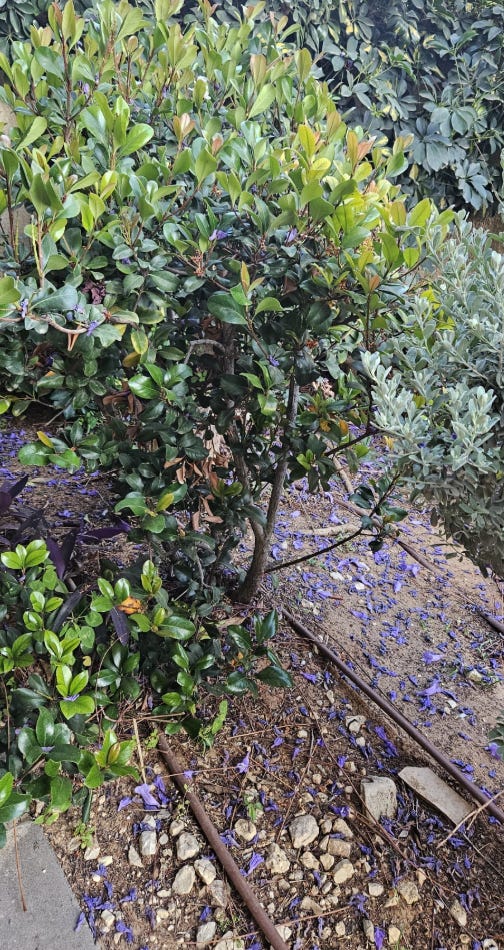
For the first time, I began to see water not as something that comes out of a tap, but as an engineering system.
I grew up in Russia, where drinking tea is part of everyday life. When my family moved to Israel, one of the small things that immediately felt different was the water.
The tap water in our city was perfectly safe to drink, but after boiling it left a heavy mineral residue in the kettle and still tasted slightly salty. To make tea the way we were used to, we ended up installing and maintaining a fairly sophisticated home filtration system.
It was a small inconvenience, but it changed the way I thought about water. I began to realise that the quality of water reaching a tap is not something to take for granted. It depends on an entire chain of engineering decisions — treatment, desalination, distribution, filtration, and monitoring.
What most people experience as a simple glass of water is actually the final step of a remarkably complex system
Water determines where people can live, how cities grow, how food is produced, and increasingly, how societies adapt to climate change. Yet billions of people still lack reliable access to safe drinking water.
Understanding why — and how engineering can help solve it — is the reason this blog exists
About Me
My name is Theodore Kovalev, and I am a student at Brighton College in the UK.
I am interested in engineering, mathematics, and physics because they are the most powerful tools I know for solving real-world problems.
In 2025, I co-developed Firefly Hydrolyte, a handheld solar-powered device that uses ATP bioluminescence to detect biological contamination in water. During testing, I helped calibrate the sensors and analyse the results. Seeing a real device turn a water sample into useful data was the moment I became fascinated by water systems and the engineering behind them. The more I learned, the more I realised that the same question kept appearing: how do we know what is happening inside a water system before something goes wrong?
I am currently working on a research project exploring how multimodal sensor data — including acoustic, pressure, flow, and vibration signals — can be combined to monitor water infrastructure and detect problems such as leaks, pipe failures, and contamination events more effectively.
Beyond research, I spend much of my time exploring engineering and environmental systems through Brighton College’s Engineering Society, technical books and papers, online courses, and personal projects. I regularly explore topics ranging from water treatment and desalination to signal processing, infrastructure resilience, and sustainability.
This blog is a record of that journey — a place where I can share what I am learning, the questions I am trying to answer, and the projects I am building along the way.
What You’ll Find Here
This blog is a place to learn and build in public.
Here I write about:
engineering projects and experiments;
water infrastructure and how it works;
the physics and mathematics behind real systems;
simulations, data, and sensor measurements;
books, papers, and ideas worth exploring;
mistakes, failures, and lessons learned along the way.
I’m still a student, which means I don’t have all the answers.
Understanding a system is the first step toward improving it.
This blog is where I try to do both.
Stay in touch
